


- House Plant Sitting
- June 16, 2026
- News
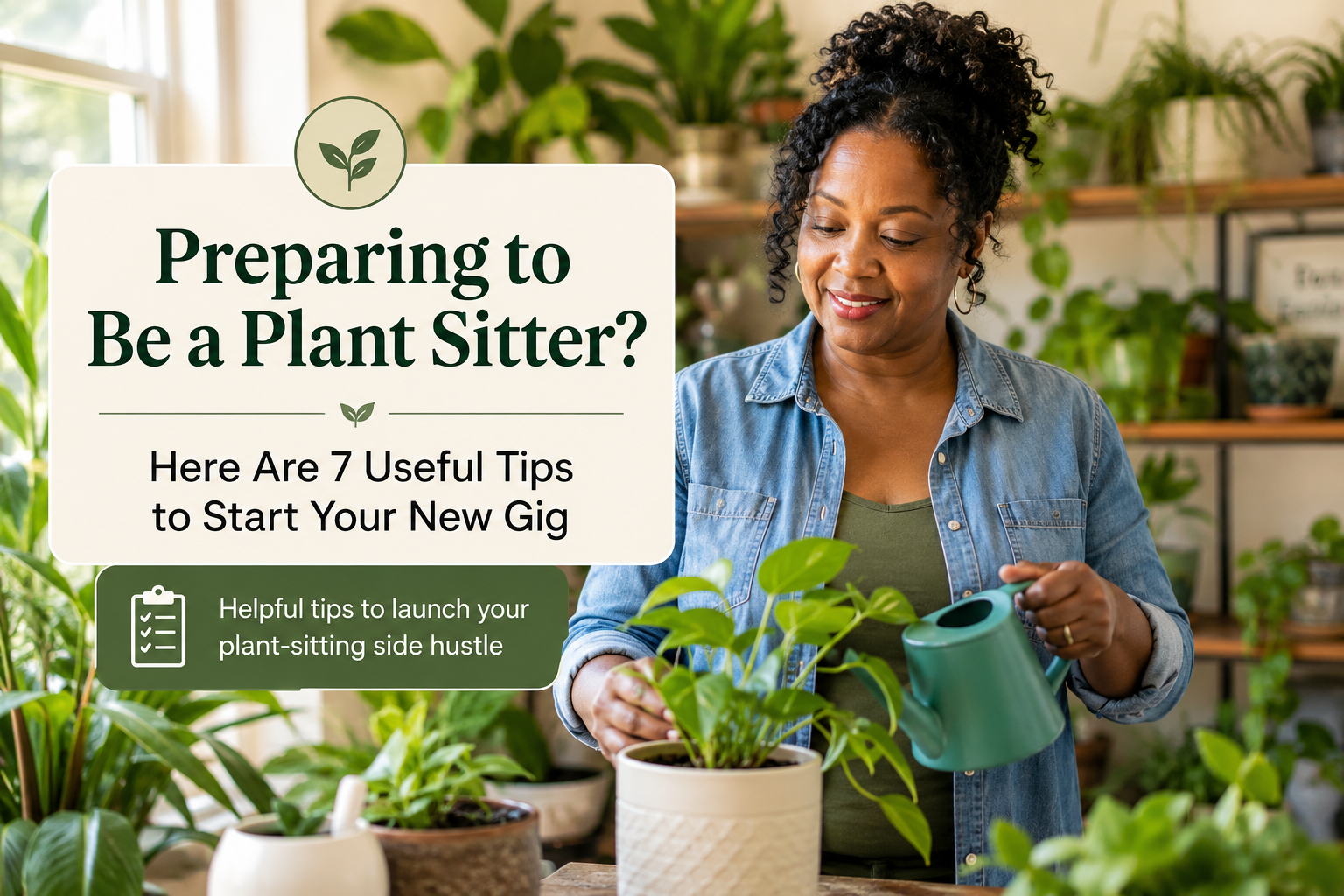
Preparing to Be a Plant Sitter? Here Are 7 Useful Tips to Start Your New Gig
Preparing to Be a Plant Sitter? Here Are 7 Useful Tips to Start Your New Gig
So you've decided you want to become a plant sitter.
First of all, congratulations.
You have chosen one of the few side hustles where your clients generally don't text you at 2 a.m., don't bark at passing squirrels, don't ask to borrow money, and rarely complain about your service on social media.
The downside is that they can die without warning.
Welcome to plant sitting.
Over the last few years, houseplants have gone from being simple decorations to becoming full-fledged family members. People name them. Talk to them. Celebrate new leaves. Post photos of them online. Some plant parents spend more money on a rare monstera than most people spend on their first car payment.
As a result, demand for professional plant sitters, house plant sitters, plant watering services, and plant care professionals has quietly exploded.
Think about it.
Millions of people go on vacation every year.
Millions of people also own houseplants.
Many own dozens.
Some own hundreds.
These people need someone trustworthy to keep their indoor jungle alive while they're away.
That's where you come in.
The good news is that you don't need a horticulture degree, a greenhouse, or the ability to pronounce complicated Latin plant names without sounding like you're summoning an ancient wizard.
You simply need to be reliable, observant, and capable of following directions better than the average houseguest.
If you're preparing to start your first plant-sitting gig—or you're thinking about turning plant care into a profitable side hustle—these seven tips will help you avoid the most common mistakes and become the kind of plant sitter people recommend to all their plant-loving friends.
Why Plant Sitting Is Becoming a Popular Side Hustle
Before we get into the tips, let's answer a question many people ask:
Is there really demand for plant sitters?
Yes.
In fact, demand is growing faster than many people realize.
Plant parents today often own:
Monstera deliciosa
Fiddle Leaf Figs
Rare philodendrons
Snake plants
ZZ plants
Pothos collections
Hanging baskets
Outdoor container gardens
Tropical houseplants
Many collections represent hundreds or even thousands of dollars in plants.
More importantly, they represent years of care and emotional attachment.
People don't want to return from a two-week vacation to discover their prized monstera now resembles cooked spinach.
That's why searches for terms like:
Plant sitter near me
Plant watering service near me
House plant sitter
Plant care service
Plant sitter jobs
Plant sitting business
continue increasing every year.
If you love plants and enjoy helping people, plant sitting can become a rewarding side hustle with surprisingly low startup costs.
Tip #1: Always Request a Plant Walkthrough Before Accepting a Job
New plant sitters often make one critical mistake.
They assume all plants are basically the same.
This belief usually lasts until they meet a plant owner with 75 houseplants and a three-page watering schedule.
Never show up blind.
Instead, ask the plant owner for a walkthrough before they leave.
Have them show you:
Every plant that needs care
Watering schedules
Special instructions
Where supplies are located
Which plants need extra attention
Which plants should be left alone
This is also your chance to ask questions.
Lots of questions.
Plant owners generally love talking about their plants.
Ask them about one pothos and suddenly you're getting the complete life story of every philodendron in the house.
Use this opportunity to learn.
The more information you have beforehand, the less likely you are to accidentally commit botanical malpractice.
Tip #2: Create a Foolproof Plant-Sitter System
One of the smartest ideas plant owners use involves labeling plants individually.
Some leave plant tags that say:
Water Me Tuesday
Water Only When Dry
Mist Weekly
Do Not Water
This is genius.
If you're starting your own plant-sitting service, encourage clients to label their plants whenever possible.
Some experienced plant parents even color-code everything:
Green Tag
Water normally.
Blue Tag
Needs extra humidity or misting.
Yellow Tag
Check soil before watering.
Red Tag
Leave it alone.
Anything that removes guesswork makes you a better plant sitter.
Remember:
The best plant care system is the one that prevents mistakes.
Tip #3: Master the Finger Test
If you learn only one plant care skill, learn this one.
It's called the finger test.
No technology required.
No expensive gadgets.
No subscription fees.
Simply stick your finger about an inch into the soil.
If it feels moist:
Don't water.
If it feels dry:
Water.
That's it.
Professional plant sitters use this technique constantly because watering schedules are only estimates.
Weather changes.
Indoor temperatures change.
Plant needs change.
The soil tells the truth.
The calendar does not.
This single skill can prevent most overwatering problems.
And overwatering is one of the fastest ways to turn a thriving plant into an expensive compost experiment.
Tip #4: Learn Which Plants Actually Prefer Neglect
One of the biggest surprises for new plant sitters is discovering that some plants genuinely prefer being ignored.
Examples include:
Snake plants
ZZ plants
Succulents
Cacti
These plants evolved to survive drought conditions.
What they did not evolve to survive is enthusiastic overwatering.
Many first-time plant sitters think:
"This cactus looks lonely. I'll give it some water."
The cactus did not request water.
The cactus was perfectly happy.
Always follow client instructions, but understand that many drought-tolerant plants require far less attention than tropical houseplants.
Sometimes the best plant care is simply walking away.
Tip #5: Prepare Like a Professional
The best plant sitters don't rely on memory.
They create checklists.
Professional plant care services often document:
Visit Schedule
Monday.
Thursday.
Saturday.
Specific dates.
Watering Notes
Which plants need water.
How much water.
How often.
Plant Locations
Living room.
Patio.
Office.
Bathroom.
Sunroom.
Special Instructions
Misting.
Rotation.
Dead leaf removal.
Bottom watering.
Emergency contacts.
Detailed notes may seem excessive.
Until you're standing in front of 40 nearly identical houseplants wondering which one was supposed to be watered.
Then they become priceless.
Tip #6: Budget More Time Than You Think
A common rookie mistake is assuming plant sitting takes five minutes.
Maybe.
If the client owns one spider plant.
Many plant parents have collections spread across:
Shelves
Windowsills
Bedrooms
Bathrooms
Kitchens
Patios
Hanging baskets
Plant stands
Some homes resemble small botanical gardens.
Others resemble larger botanical gardens.
Allow extra time.
Rushing leads to mistakes.
Mistakes lead to unhappy plants.
Unhappy plants lead to unhappy clients.
Unhappy clients do not leave five-star reviews.
Tip #7: Communicate Like a Professional
Want to instantly stand out from other plant sitters?
Send updates.
Plant owners love updates.
Especially photos.
A simple message saying:
"Everything looks healthy today. Watered the pothos, monstera, and fiddle leaf fig. The snake plant continues to judge everyone."
can provide tremendous peace of mind.
Good communication builds trust.
Trust builds repeat customers.
Repeat customers build successful plant-sitting businesses.
And successful plant-sitting businesses often grow through referrals from other plant parents.
Bonus Tip: Help Your Clients Prepare Before Vacation
Great plant sitters often help clients prepare before they leave.
Recommend simple steps like:
Water Deeply Before Departure
A thorough watering before vacation helps plants stay hydrated longer.
Move Plants Into Partial Shade
Less sunlight means slower moisture loss.
Group Plants Together
Makes watering easier and increases humidity.
Move Hanging Baskets Near Water Sources
This simplifies maintenance visits.
Leave Written Instructions
The clearer the instructions, the smoother the visit.
The goal isn't just to keep plants alive.
It's to make the entire experience stress-free for both the client and the plant sitter.
Frequently Asked Questions About Becoming a Plant Sitter
How much do plant sitters charge?
Rates vary by location and collection size. Most plant sitters charge per visit, while others offer weekly packages or vacation plant care plans.
Do I need experience to become a plant sitter?
Not necessarily. Basic plant knowledge, reliability, and a willingness to learn are often enough to get started.
Is plant sitting a good side hustle?
Yes. Startup costs are low, schedules are flexible, and many plant owners become repeat customers.
How do I find plant-sitting jobs?
You can advertise locally, join plant groups, list services online, build a website, or use a plant sitter app that connects plant parents with sitters.
Can plant sitting turn into a business?
Absolutely. Many people start with a few vacation clients and eventually expand into plant watering services, repotting, plant doctor visits, indoor plant maintenance, and full plant care services.
The Secret to Becoming a Great Plant Sitter
At the end of the day, great plant sitters aren't necessarily master gardeners.
They simply pay attention.
They follow instructions.
They communicate well.
They understand that every plant owner cares deeply about their collection.
And they resist the overwhelming human urge to water everything in sight.
Do that, and you'll quickly become the plant sitter every plant parent hopes to find before their next vacation.
Share on